
Forex traders use different trading styles to match their goals and temperament. Two popular short-term strategies are scalping and swing trading. Scalping involves making many quick trades to capture very small price moves, while swing trading holds positions for longer, aiming to catch larger market swings. Both styles seek profit from price fluctuations but differ in time frame, frequency, risk, and capital use. Understanding these differences can help you decide which approach fits your personality and schedule.
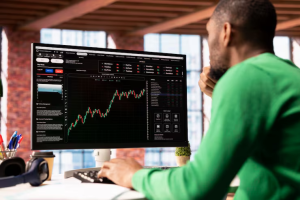
Traders often monitor multiple charts across devices. Scalpers rely on very short-term charts (such as 1‑ or 5‑minute charts) to spot quick opportunities, whereas swing traders focus on longer-term charts (4‑hour or daily) to ride bigger trends. The image above illustrates a trader analyzing market data on a laptop and smartphone, a common practice in active trading strategies.
What Is Scalping in Forex?
Scalping is an ultra-short-term trading style targeting tiny price moves. Scalpers enter and exit trades within seconds or minutes, executing dozens or even hundreds of trades per day. Because each trade yields only a few pips of profit, scalpers rely on very high win rates and fast execution. Key features of scalping include:
- Time horizon: Seconds to minutes. Trades are closed almost immediately once a small profit is made.
- Trade frequency: Very high. A scalper may place dozens or hundreds of trades in a single session.
- Profit target: Very small (often 2–10 pips per trade). Scalpers aim for tiny gains repeatedly.
- Tools and charts: Very short time‑frame charts (1–5 minute or tick charts) and fast indicators (e.g. short-term MACD or RSI). Deep liquidity and low-latency brokers are essential.
- Risk profile: Tight stop-loss orders. Since trades are brief, scalpers typically have low exposure per trade (no overnight risk). However, scalping demands strict risk control because losses can accumulate quickly if not managed.
Scalpers profit in all market conditions, even when trends are weak, by exploiting small inefficiencies. This approach requires intense focus and lightning-fast decision-making. As one trading guide notes, scalping is like a sprint – requiring quick bursts of energy and rapid reactions to market moves.
What Is Swing Trading?
Swing trading is a medium-term strategy that seeks to capture larger price moves over hours, days, or even weeks. Swing traders identify and trade in the direction of prevailing trends. They typically open a position during a pullback (temporary counter-move) and hold it through the next significant swing. Key features of swing trading include:
- Time horizon: Days to weeks. Positions are held much longer than in scalping.
- Trade frequency: Low. Swing traders may only take a few trades per week or month.
- Profit target: Larger (often tens to hundreds of pips per trade). Swing trades aim for big moves in the market.
- Tools and charts: Higher time-frame charts (4‑hour, daily, or weekly) and technical analysis (trendlines, support/resistance, Fibonacci, etc.). Fundamental factors (economic news, macro trends) may also play a role.
- Risk profile: Trades run overnight and through market events. This means exposure to gaps and news risk (e.g. earnings, economic data) that can cause big swings while positions are open.
Swing trading is often likened to running a marathon rather than a sprint. It requires patience and the discipline to hold through pullbacks and drawdowns. Swing traders have time to analyze setups; they “live on” the hourly to daily charts. This style can suit part-time traders who can check the market periodically rather than full-time.
Key Differences Between Scalping and Swing Trading
The table below summarizes the main differences between scalping and swing trading in Forex:
| Aspect | Scalping | Swing Trading |
| Time Horizon | Seconds to minutes (intraday) | Days to weeks |
| Trade Frequency | Very high (tens to hundreds of trades per day) | Low (a few trades per week) |
| Profit Target | Small (few pips per trade) | Large (often tens to hundreds of pips) |
| Risk & Exposure | Low per trade (short exposure, no overnight risk) | Higher (overnight and gap risk) |
| Monitoring Required | Constant (full-time focus on charts) | Periodic (can check less frequently) |
| Stress Level | High (rapid decisions under pressure) | Moderate (more time to analyze) |
| Capital/Costs | Often higher (many trades, heavy use of leverage) | Moderate (fewer trades, easier risk management) |
| Typical Tools | 1–5 min charts, tick charts, Level II quotes | 1H/4H/Daily charts, trendlines, S/R, fundamental analysis |
As this table shows, scalping and swing trading occupy opposite ends of the trading spectrum. Scalpers work on tiny time frames with many trades, while swing traders work on longer charts with far fewer trades. These differences lead to distinct risk profiles and skill requirements.
Pros and Cons of Each Style
Pros of Scalping
- Immediate opportunities: Scalpers can profit in both trending and flat markets because they target any small price move. They don’t have to wait for a big trend to emerge.
- Quick feedback: Trades close quickly, so winners and losers are realized fast. This rapid feedback can speed up learning.
- Less overnight risk: Since positions are closed within minutes, scalpers avoid overnight gaps and swap fees.
- High potential throughput: With many trades per day, even small profits can compound significantly.
- Low entry barrier: Scalping uses very tight stops, so traders can often start with a relatively small account (low entry threshold).
Cons of Scalping
- High transaction costs: Making hundreds of trades incurs high spread and commission costs, which can eat into the small profits.
- Intense focus required: Scalping demands constant attention. Traders must stay glued to the screen and make split-second decisions.
- Stress and fatigue: The fast pace and pressure of scalping can be mentally and physically draining.
- Not beginner-friendly: Scalping requires discipline, quick reflexes, and deep market experience. Experts advise beginners to avoid scalping until they have honed their skills.
- Technical risks: Reliance on platform speed and internet stability is critical. Any technical glitch (lag, disconnection) can cause losses in scalping.
Pros of Swing Trading
- Less time-intensive: Swing traders make far fewer trades. This means lower transaction costs and the ability to trade part-time.
- More analysis time: There is ample time to analyze charts and plan trades (for example, using indicators or studying fundamentals between candles).
- Larger profit potential: By catching bigger market moves, each swing trade can yield a much larger profit (100+ pips) compared to a scalping trade.
- Lower stress: A slower pace reduces pressure. Swing trading is generally considered easier on traders’ nerves, making it more suitable for beginners or those with other jobs.
- Trade multiple positions: Traders can hold several swing trades across different currency pairs at once, diversifying opportunities.
Cons of Swing Trading
- Overnight and event risk: Holding trades for days exposes you to news and market gaps. Unexpected news (economic reports, geopolitical events) can trigger big losses overnight.
- Requires patience: Trades may take days or weeks to develop. You must tolerate drawdowns as prices swing before the trend plays out.
- Wider stop-losses: To capture large moves, swing trades use larger stop-loss distances. This can lead to bigger losses on a single trade if the market reverses.
- Fewer opportunities: Swing trading generates fewer signals, so you may have long waits between quality setups.
- Psychological pressure: Holding losing positions overnight can be stressful. Traders must resist the urge to close good trades too early or add to losing positions.
Choosing the Right Style for You
Ultimately, the choice between scalping and swing trading comes down to your personality, goals, and schedule. Consider the following:
- Time and Availability: Scalping is essentially a full-time job at your screen. If you have several hours per day to trade and can focus completely, scalping might suit you. Swing trading fits better if you have a job or other commitments, since it requires only intermittent monitoring.
- Decision Speed and Stress Tolerance: Scalping favors traders who enjoy fast-paced action and can make quick decisions without panicking. Swing trading is for those who prefer a deliberate approach and can patiently endure short-term losses while waiting for a trend.
- Risk and Capital: If you are comfortable with small, tight stop-losses and high trade volume, scalping may work; if you prefer placing fewer trades with bigger stops (and can handle overnight drawdowns), swing might be better.
- Trading Goals: Are you aiming for quick, incremental profits, or larger gains per trade? Do you want immediate feedback from many trades, or can you wait days for a single big move?
Pro Tip: It can be helpful to try both styles on a demo account. This lets you experience the pace and stress of each without risking real money. There is no universally “best” style – the one that aligns with your lifestyle and mindset will likely work best.
Conclusion
Scalping and swing trading are both valid Forex trading styles, each with its own advantages and challenges. Scalping is like sprinting – fast and intense – whereas swing trading is more like a marathon – steady and patient. Neither approach is inherently superior. The “best” style is the one that fits you: your risk tolerance, time availability, and trading temperament. Many successful traders even blend both methods, using scalping techniques in the short term and swing setups in the longer term.
Whatever style you choose, remember to use proper risk management and keep learning. Test your strategy, stick to your trading plan, and be honest about what suits you. In the end, aligning your Forex trading style with your personal strengths and goals is the key to consistent success.








Be First to Comment