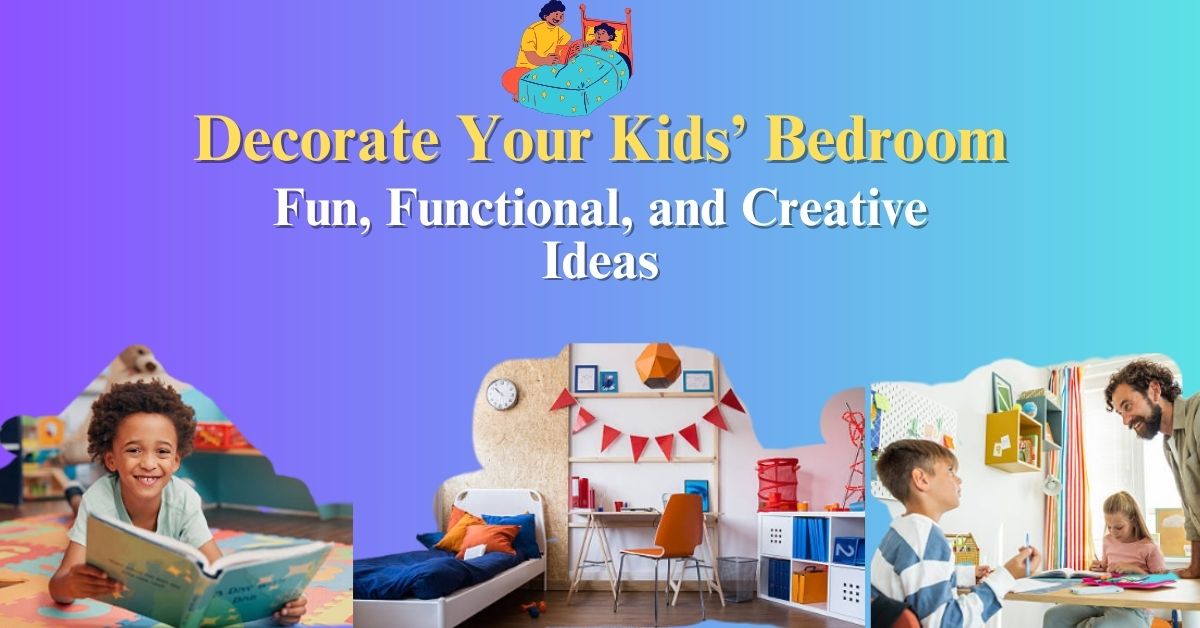
Designing a child’s bedroom is a delightful challenge: it must reflect the child’s personality and spark imagination, while remaining practical and safe. Experts note that a successful kids’ room balances the child’s interests with the home’s overall style. For example, one design authority recommends using bold colors, imaginative wallpaper patterns, and plenty of space to play, but steering away from overly “kitschy” themed décor. Instead, choose timeless pieces (like simple furniture and accent walls) that can easily be updated as tastes change. The following guide covers all aspects of decorating for preschool and school-age children, with ideas that are fun, functional, and creative – and won’t break the bank.
Safety and Planning First
Safety must come first in a kids’ room. As one expert advises, “safety should be a main concern when decorating your child’s room”. This means using non-toxic paints (low- or zero-VOC), securing furniture, and eliminating hazards. For instance, choose paints labeled low- or zero-VOC to avoid harmful fumes, and always ventilate the room during painting. All dressers, bookshelves, and tall furniture should be anchored to wall studs to prevent tipping. Outlet covers can protect little ones from electrical shocks, and cordless window coverings or cord-cleats should replace looped blind cords. Soft, rounded-edged furniture pieces are safer than sharp-edged ones, and any small décor items (toys, decorations) should be free of tiny detachables or choking hazards. In short, examine all bedding, paints, rugs and fabrics for safety, and place the child’s bed and furniture so that exits remain clear.
Beyond basic childproofing, plan the room layout thoughtfully. Decide on zones: a sleeping area, play area, study nook (for school-aged kids), and storage. Position the bed away from windows and blind cords, ideally against a wall. Ensure there is ample floor space for play (especially for preschoolers who play on the floor) and room to walk around furniture. In general, follow these planning steps:
- Bed placement: For toddlers and preschoolers, consider a low twin or a mattress on the floor (a “floor bed”) for safety. If using a standard twin bed, use guard rails if needed. For older kids, loft or bunk beds can save space, but be sure the upper bunk has rails on all sides and the mattress sits well below the top of the rail.
- Traffic flow: Allow enough open space for a child to move freely. Avoid blocking closet doors or windows. If the room is small, use light colors and mirrors (safe, unbreakable ones) to visually expand the space.
- Future-proofing: Avoid completely committing to a single theme. Designers recommend buying “plain white furniture” or simple wood pieces that do not lock you into a specific motif. This way, the room can easily evolve as the child grows. (For example, instead of a Pixar-themed bed, use solid-color bedding and swap out a few decorative pillows when interests change.)
- Ergonomics for studying: For school-age children, include a desk area. Place the desk where it receives good natural light but is not facing a distraction like a door or a busy hallway. Choose a desk and chair sized for the child. A psychologist advises selecting a desk “with drawers or compartments, enabling your child to store their study materials within arm’s reach”. A supportive chair is also important for correct posture during homework.
With a safe, flexible plan in place, the room can grow with the child.
Color, Walls and Themes
Color and wall treatment set the tone of the room. For a vibrant yet versatile look, start with a neutral base and add bursts of color. The Spruce notes that a neutral color palette is “never a bad idea, especially for kids’ rooms,” since children’s favorite colors and interests often change rapidly. Soft grays, whites, creams or pale greens on most walls can provide a calming backdrop. Then add splashes of brighter accent color on one wall, in furniture, or in textiles. For example, painting an accent wall in a bold shade (such as deep blue, green or even a fun pattern) is budget-friendly and eye-catching. One décor expert suggests painting just one feature wall – for instance, highlighting a fireplace or bed wall – rather than all four walls. This uses less paint (a small “tester pot” can even cover it) while still adding drama.
Wall decals, stickers or wallpaper borders offer another easy pop of interest. Removable wall stickers are inexpensive and changeable as the child grows. They can depict anything from stars and animals to abstract shapes, and peel off cleanly when the child tires of them. If wallpaper is desired, consider one wall only or a non-permanent peel-and-stick wallpaper for versatility. Designers also praise bold wallpaper patterns for kids’ rooms – think geometric shapes or friendly prints – which make a room fun without being tied to a specific theme. In general, avoid purely “character” or movie-themed décor on walls; instead echo your child’s interests with neutral furnishings and swap-out art or pillows.
A creative and practical idea is a chalkboard wall or panel (or large framed chalkboard) where kids can draw freely. According to design experts, a chalkboard surface in a child’s room “provides a perfect setting for pretend play, social games and learning,” and lets children “dress the wall in [their] own artwork,” encouraging their creativity. (For smaller budgets or rentals, chalkboard paint can be applied to one section of wall, or even on furniture like a closet door or dresser drawer front.) Likewise, consider painting one small section or using wall decal letters to create an educational element (like an alphabet or number chart) without committing to a fixed theme.
Another timeless approach is to create a gallery wall of art and photos at the child’s eye level. Framing your child’s own artwork, paintings or family photos makes the space personal. The Spruce recommends framing children’s drawings on the wall so that they can be easily rotated as the child grows. Picture ledges (floating narrow shelves) are ideal for this: they let you lean frames of different sizes, trophies, certificates or sculptures, and update them frequently. This way, a handful of frames on the wall is much more polished than random posters on tape, and you can swap them out anytime their interests change.
In summary, focus on versatile wall decor: use paint, wallpaper or decals for color, set up areas for the child’s own art, and reserve big investments (like furniture) for long-lasting neutral pieces. This creates a room that feels lively and personal but can adapt as your child’s preferences evolve.
Floor, Soft Furnishings and Textiles
The floor and soft elements of a child’s room should be cozy, safe, and easy to clean. Since young children often play on the floor, consider practical flooring. Solid floors (hardwood, laminate or vinyl) are easy to sweep, but bare tile can be cold. A popular solution is layering a few washable area rugs over wood or resilient flooring. A soft, durable rug provides a comfortable play spot and can be washed or replaced if stained. Designers suggest choosing mid-tone, patterned rugs that hide stains well (for example, an oriental-style rug or one with jewel-toned patterns). If carpeting is already in place, cover the highest-traffic areas with throw rugs or foam play mats. For younger kids, ensure all rugs are nonslip or secured to prevent trips.
Soft textiles also let you inject color and comfort:
- Bedding: Use fun but non-genre-specific bedding sets and mix in bright throw pillows or blankets. For instance, if your child likes space, you might add one space-themed cushion to a solid duvet rather than a headboard shaped like a rocket. My Bespoke Room suggests soft furnishings (cushions, rugs, beanbags) as “the perfect solution for incorporating a ‘theme’” cheaply. In short, printed pillows or a blanket with dinosaurs or fairies can satisfy a themed wish without full redecoration.
- Window treatments: Blackout curtains can help children sleep, while sheer curtains soften daylight. Choose washable fabric and install cord safety devices. Stringing fairy lights or decorative lighting across a wall or curtain rod adds both illumination and charm. These lights serve double duty: they act as gentle night lights and stylish accents.
- Soft seating: A cozy corner with a beanbag or cushy floor pillows is perfect for reading or naps. Designers note that beanbags, floor cushions and fluffy rugs not only feel fun to children but also add pattern and color without cluttering with furniture. They are especially good for marking out a play or reading nook. A tufted ottoman or storage bench can provide both a seat and hidden toy storage.
- Decorative textiles: Bunting, garlands or fabric pennants draped across a wall or bed can brighten a room at very low cost. One advice blog mentions that even a simple string of bunting or lights “hung along a bed frame” or wall is a low-cost, low-effort decorative touch. These can be homemade or store-bought and easily swapped out.
By layering textiles and soft furnishings strategically, the room becomes welcoming and safe (soft edges, no hard corners on the floor), while also feeling warm and personalized.
Furniture and Layout: Functional Choices
Choosing the right furniture ensures the room is as functional as it is fun. Keep furniture sizes and design age-appropriate: low tables and chairs are essential for preschoolers, and bigger desks or bookshelves for older kids. Some guidelines:
- Beds: As mentioned, a simple twin bed is common for preschoolers, often placed directly on the floor or with a low frame. Bunk beds or loft beds can free up space in a small shared room, but only for children about six or older with safe rails. For younger children, consider beds with built-in drawers underneath; HowStuffWorks suggests that under-bed storage drawers on wheels are practical for storing out-of-season items. Alternatively, a trundle bed (which pulls out a mattress) is ideal for accommodating sleepovers and is easily stowed under the main bed.
- Dressers and wardrobes: A low chest of drawers provides ample storage for clothes. One safety tip is to reinforce or remove any old toy chest locks and ensure hinges won’t pinch little fingers. Wall hooks or pegs at child height let kids hang up jackets or dress-up clothes themselves. Hanging a clothing rail or hooks dedicated to costumes (for imaginations to run wild) is also helpful and keeps the rest of the closet tidy. In fact, one decorating tip advises making a child’s dress-up clothes “a feature” by installing a rail – after all, if little ones love playing dress-up, displaying the outfits neatly is both fun and organized.
- Desks and chairs: For school-age children, include a small desk or study table. A children’s desk need not be elaborate: even a simple table at the right height works if it has space for books and a lamp. The chair should be supportive; as one psychologist notes, the desk should be placed where the child has light and can glance at reminders pinned nearby. If space is limited, multi-functional furniture like a loft bed with a built-in desk underneath is a clever choice. This frees floor space by stacking uses vertically.
- Seating and lounging: Besides a bed, provide a seating area for quiet activities. A small upholstered chair or reading nook with floor pillows can make a cozy spot. For example, placing a plush chair with a reading light and a basket of books creates a mini-reading corner.
- Stools and side tables: Even a tiny table lamp needs a surface. If there’s no room for a dedicated table, consider a narrow shelf or a small nightstand next to the bed. One source suggests that a floor lamp with a sturdy base can substitute for a table lamp where space is tight.
Whenever possible, stick to simple, neutral furniture. For example, MyBespoke Room advises choosing plain white or wood-toned furniture that won’t “lock” you into a theme. That way, vibrant elements (pillows, art, linens) can carry the child’s chosen motifs, and the bed, dresser, and shelves remain useful even after tastes change. Remember to anchor dressers and bookshelves to the wall to prevent tipping, and to leave floor space clear for play. With an efficient layout, a kids’ bedroom can flow well: say, a distinct sleeping corner, a play area in the center or a corner rug, and a desk area by the window for good light.
You may also like: How Gadgets Make Your Home Smart
Smart Storage and Organization
A functional kids’ room requires clever storage so toys and clothes have a home. Experts stress that accessible, child-friendly storage is key. For example, HowStuffWorks notes that at preschool age, “toy storage is paramount,” since young children accumulate many playthings but are easily overwhelmed. Here are effective storage solutions:
- Low open bins and shelves: Place open baskets or plastic bins on low shelves so kids can put away toys themselves. Such low shelving units (often called cubbies) let even toddlers reach toys without climbing. HowStuffWorks recommends “lots of low, open storage bins, baskets, and shelves” with smooth, rounded corners for safety. Label each bin with pictures or words (or color-coded tape) to encourage cleanup.
- Toy chest or storage bench: A classic toy chest with a flat top can hold bulkier items and even double as extra seating or a play surface. (If using a chest with a lid, be sure to add safety hinges so the lid cannot slam shut.) It’s also helpful to keep frequently used toys within easy reach, while stowing less-used toys in higher cabinets
- Under-bed storage: Utilize the space under the bed. Rolling drawers or storage boxes can slide under a loft or bunk bed to keep things off the floor. This keeps the room tidy and ensures toys/clothes are easy to grab when needed.
- Closet organizers: In the closet, add shelves or hanging organizers at children’s height. Short hanging rods let kids help hang their clothes. The HowStuffWorks guide suggests having low, rounded pegs in closets for quick hanging of jackets or costumes. Also, installing a shoe rack or bins in the closet helps contain clutter.
- Multi-purpose furniture: Look for beds or seating with built-in drawers. A storage ottoman can hold toys or blankets. Even decorative boxes (painted wooden crates or fabric boxes) can sit attractively on shelves while hiding items. As one mom advises, a cozy room often comes from “collected pieces over time” – e.g., gradually adding baskets and bins until every toy has a spot.
- Display space: Encourage kids to put stuff away by displaying their achievements. Picture ledges (as mentioned) can hold trophies or art, and magnet boards on a wall let them pin drawings or schedules. Hooks on the back of the door (for backpacks) or on walls (for hats and bags) make use of vertical space.
Ultimately, the goal is to reduce visible clutter and make cleanup easy. One mom-turned-designer reminds others: “Keep it fun [and] incorporate storage solutions”. With ample, low storage and a place for everything, even the tidiest of rooms can feel both organized and inviting.
Lighting and Ambience
Good lighting makes a room both functional and cozy. Aim for layers of light: an overhead ceiling light for general illumination, task lights for reading or crafts, and accent lights for atmosphere. Here are tips:
- Ceiling light: A main ceiling fixture or flush-mount light should provide bright light. Consider a fixture with a dimmer switch so you can lower the lights at bedtime or for movie-time.
- Desk or bedside lamp: Each study desk or bedside table should have a dedicated lamp. A soft white bulb (not harsh blue) is easier on young eyes. If space is tight, a clip-on lamp can attach to a bed frame or shelf. One expert suggests placing the desk so that good light is available and not directly in front of a distracting view.
- Night lights: Many children feel more secure with a night light. Even a small, plug-in LED in the room or hallway can comfort a preschooler or a timid child during midnight potty trips. A HowStuffWorks article notes that “to ensure adequate sleep,” items like a small night-light and a security blanket (or stuffed “lovie”) are often more important than decor. Decorative string lights, salt lamps or star-projector night lights also gently illuminate the room without being too bright.
- Decorative lighting: Stringing fairy lights, garlands with lights, or LED lamp decorations can double as nightlights or whimsical accents. For instance, clipping a string of snowflake or flower lights around a mirror or window frame adds charm and can be left on overnight for a soft glow.
- Natural light: During the day, maximize daylight for a happy mood. Don’t obstruct windows; use light, washable curtains or blinds that can control glare for play or computer time. With good natural light, the room feels cheerful and spacious.
By combining overhead, task and accent lighting, the room becomes versatile: bright and active by day, and cozy and calm by night. This layered approach also aids functionality (reading, dressing, etc.) and contributes to a pleasant atmosphere.
Age-Appropriate Considerations
The needs of preschoolers (roughly ages 3–5) differ from those of school-aged children (6–12), so adapt elements accordingly:
For Preschoolers: This age craves play and discovery. Emphasize open floor space and accessible storage. Use durable, washable materials (wipes-able walls, machine-washable curtains) since craft projects and spills are likely. A low twin bed or floor mattress on a sturdy frame is usually safest. According to safety guides, avoid faddish toddler beds (like fancy car beds) that only last a year or two; instead, a simple twin mattress on the floor can work for a few years and is easier to change later. Decorate with bright, soothing colors (greens, blues, or sunny yellow) on focal walls. Include lots of bins and baskets for toys, so that cleanup is child’s play. Wall-to-wall carpet is comfortable but stain-prone; instead use layered area rugs on easy-clean floors as needed. Provide a child-size table and chairs set: kids love having a table for drawing or snack-time. (Interestingly, such kid furniture can often be used later as side tables or lawn furniture.) Finally, encourage independent play by including a cozy corner: maybe a small tent or teepee (see below), floor pillows, and a toy chest.
For School-Age Children: Their interests expand and they do homework, so adjust the room to fit. If they love reading, set up a comfortable reading nook with shelves of books. A functional desk area with a clock, calendar, or whiteboard can help organize study time. Consider thematic touches that reflect hobbies (e.g. a globe for a geography lover) but keep them as switchable accessories (posters, cushions) rather than permanent fixtures. Loft or bunk beds can maximize play/work space if the room is small; be sure these have proper rails and a safe ladder. If siblings share a room, using matching twin beds or bunk beds can make the room feel cohesive – HouseBeautiful notes that matching beds “pull a shared space together” and allows kids to have their own side. Also plan for sleepovers: a trundle bed or even a stash of sleeping bags and pillows means friends can stay comfortably. Finally, involve the child in choosing some elements: by age 6–8, kids can articulate likes and dislikes, so even letting them pick the desk chair color or the wall art can make it more “theirs.”
No matter the age, always supervise placement of safety items (guardrails, outlets, nightlights) and update as the child grows. For example, remove crib bumpers once a child starts climbing, and switch from toddler bed to tall bed when they’re ready. The key is adaptability: as one design expert puts it, a kids’ bedroom should be “easy to adapt as [they] change and grow”.
Encouraging Creativity and Personal Touches
A truly fun kids’ room sparks imagination. Include elements that invite creativity:
- Chalkboard or Whiteboard: A wall or section painted with chalkboard paint is like having an ever-changing mural. Kids can draw, practice writing, or play teacher on it. (If painting walls isn’t an option, an affordable alternative is a large framed chalkboard leaning on a wall.) As one design guide explains, letting kids “dress the wall in [their] own artwork” will encourage them to create and play. This transforms the room into an active canvas rather than a static space.
- Play Elements: If space allows, set aside a play corner. A fabric tent or teepee is a popular addition: it defines a “hideout” for storytime or pretend games. Even a simple arch with hanging fabric can serve as a “fort.” A small puppet theater, play kitchen, or instrument corner can be added based on the child’s interests. These don’t have to be elaborate: a cleaned-out cardboard box can spark hours of play!
- Interactive Projects: Involve kids in DIY crafts to decorate. For instance, let them paint a plain wooden sign with their name or decorate a picture frame. You might do a stenciled border together (using painter’s tape and paint) or make a garland from paper shapes. Personal projects like these add unique character and help children feel ownership of the room.
- Display Their Work: Create a rotating art gallery for school projects or crafts. A corkboard or strings with clips lets kids pin up their creations. Regularly replace old drawings with new ones – this not only decorates the space but celebrates their creativity. (One source advises using frames so that even a poster “looks far more polished than… blue-tacked” while still being changeable.)
- Personal Collections: Turn collectibles or favorite toys into decor. For example, a shelf with toy cars or dinosaurs, or a wall hook holding a prized stuffed animal, makes the room personal. Many parents find that featuring such items (in a tidy way) makes the child feel special. Just keep rotations – don’t make anything too permanent.
Remember, the goal is to make the room uniquely theirs. One experienced parent advises: “keep it fun, add personal touches where you can and incorporate storage”. In practice, that means mixing in elements of the child’s interests (astronomy, music, animals, art) but always in ways that can be updated later.
Involving Your Child and Staying Flexible
Design experts often stress the importance of involving children in the process. A design blogger quotes moms who let their kids choose meaningful items: for example, one mother said she included her daughter’s opinion by letting her pick string lights for the room, making her daughter excited about the result. Letting a child select a pillow, color accent, or artwork can make them feel invested. Of course, within reason: supervise to ensure choices are safe and appropriate for the room’s size.
Keeping the design flexible is equally important. As multiple sources note, a child’s tastes change rapidly. House Beautiful reminds us that kids have “growing sense of self” and rooms should cater to evolving needs. For this reason, avoid heavy themes (e.g., full murals or themed furniture). Instead of repainting walls for every new interest, swap out smaller pieces: new bedding, a lampshade, a poster, or throw blanket. My Bespoke Room advises using cushion covers, artwork and toys to express themes – for instance, space-themed throw pillows instead of a spaceship-shaped bed.
When your child expresses an interest, see if you can fulfill it within the current decor framework. For example, if they suddenly love dinosaurs, add a dinosaur decal or bedding rather than redecorating the whole room. This approach saves money and fuss. As one parent designer put it: “Take your time… find pieces you love over time and don’t buy it all at once”. Slow, thoughtful additions prevent the room from feeling overdone or cluttered.
Budget-Friendly Decorating Tips
A wonderful kids’ room doesn’t require a huge budget. Many ideas above are inexpensive or DIY. Here are specific tips to save money:
- Use Paint Creatively: Painting is often the cheapest makeover. Paint one accent wall instead of all walls, or use painter’s tape to create stripes or simple graphics. You can even paint furniture with leftover paint. For small feature areas, a sample pot suffices. Stenciling or decals can also look custom without the cost of professional wallpaper.
- Upcycle and DIY: Give old furniture a new life. A thrifted dresser can be sanded and painted in bright colors or patterns (My Bespoke notes that “upcycling old furniture is super cost-efficient”). Even turning a plain shelf into a rainbow by painting each shelf a different color is an inexpensive project. Handmade items – like a DIY canvas painting or a fabric bunting made from scraps – add charm for little cost.
- Affordable Décor: Shop at discount stores or online marketplaces. Photo frames, wall decals, and throw pillows can be found cheaply. Sometimes even dollar-store lanterns or storage bins can be painted or customized. One blogger suggests buying large frames (for posters or kids’ art) because they look polished and can be reused.
- Swap & Hand-me-downs: Keep an eye on community boards or friends/family for free or cheap children’s furniture and toys. A sturdy little desk or chair can often be passed down. Simply repainting a hand-me-down dresser can fit any new color scheme.
- Smart Storage on a Budget: Plastic bins and crates labeled with a marker do the job and are cheap. A pegboard on the wall (inexpensive hardware store item) can organize craft supplies or hanging bags.
- Focus on Key Pieces: Invest in just a few good-quality items (like a bed frame and mattress or a desk) and get creative around them. For example, MyBespoke suggests having one stand-out painted feature or piece and keeping the rest simple.
In essence, creativity trumps cost: even small changes can have big impact. One article wryly notes you don’t need a $X theme bed to please a child – use “soft furnishings and finishing touches” to hint at themes instead. A few colorful pillows or a DIY art print can transform the mood at minimal expense.
Inclusive, Gender-Neutral Styling
Since interests are personal, it’s wise to avoid rigid gender stereotypes in décor. Mix “boy” and “girl” elements or use universally liked colors like yellows, greens, or oranges. As design experts observe, neutral or balanced color schemes are best because children’s preferences can change quickly. For example, instead of strict pink vs. blue, opt for teal, lavender, or earthy tones that appeal to any child. Add pops of color or pattern through easily changed items (like bedding or accent rugs). This inclusive approach ensures the room feels welcoming no matter who uses it.
Conclusion
A child’s bedroom should be a happy blend of playfulness, practicality, and personality. By prioritizing safety and storage, choosing adaptable colors and furnishings, and weaving in creative, personal touches, parents can create a room that delights kids and stands the test of time. Remember to engage the child in age-appropriate ways, keep the design flexible, and use budget-friendly hacks like paint accents, secondhand finds, and DIY projects. With thoughtful planning and creativity, even a modest space can become a joyful haven for any child — where they sleep soundly, play freely, and dream creatively.






Be First to Comment